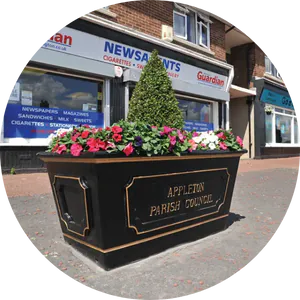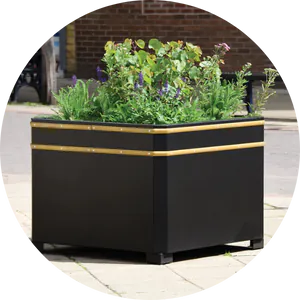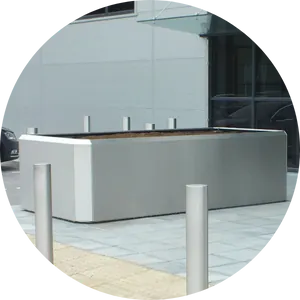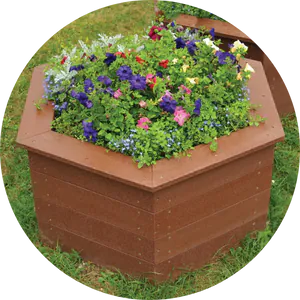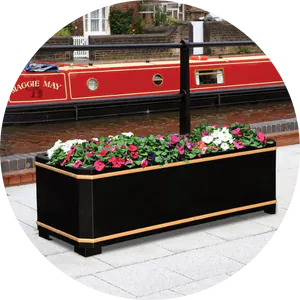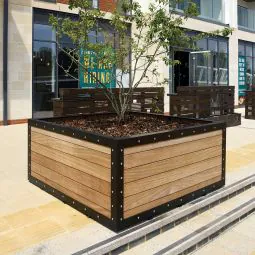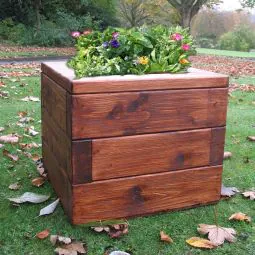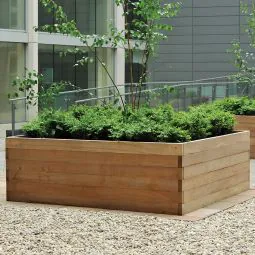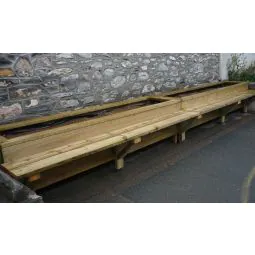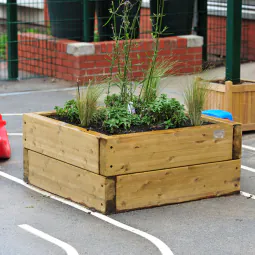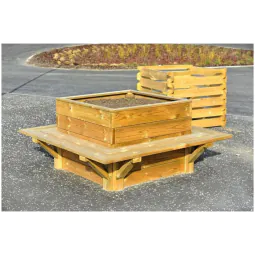





Broxap's timber planters bring a natural, organic aesthetic to commercial and public realm schemes. Our large capacity, stylish planters designed to make a genuine impact wherever they're sited, whether that's a town centre pedestrian zone, a recreational area, a campus quad or a public park. They're available in a range of styles and sizes, giving specifiers the flexibility to match a timber planter to the scale of the planting scheme and the character of the surrounding space, rather than working around a single standard option.
Hardwood Iroko and Softwood Options
Timber planters are generally supplied in hardwood Iroko, a dense, naturally durable hardwood well suited to outdoor commercial use thanks to its resistance to decay and its ability to weather attractively over time. For projects with different budget or design requirements, a treated softwood option is also available, giving specifiers a more cost-effective route to a timber planter without compromising on the natural aesthetic that timber brings to a scheme.
FSC-Certified, Sustainably Sourced Timber
Sustainability credentials matter increasingly to public sector and corporate buyers alike, and all timber used in our planters can be supplied FSC® certified (FSC-C122338) on request. FSC certification confirms that the timber has been sustainably sourced from responsibly managed forests, giving local authorities, contractors and procurement teams the documentation they need to meet environmental sourcing requirements on public realm and commercial projects. For schemes with sustainability targets or planning conditions attached, specifying FSC-certified timber planters can be a straightforward way to support those commitments without compromising on design.
Where Timber Planters Work Best
Timber planters are particularly well suited to parks, campuses, recreational areas and any setting where a natural, organic material feels more appropriate than metal or concrete. They work well in conservation areas, green corridors and softer landscaped schemes, where the goal is to soften green spaces rather than introduce a harder, more urban material. Timber also pairs naturally with planting itself, creating a more cohesive, garden-like feel than materials with a harder industrial edge.
It's worth noting that timber does require more regular maintenance than recycled plastic, steel or concrete alternatives, since it benefits from periodic treatment to maintain its appearance and protect it from the elements over time. For schemes where minimal maintenance is the priority, recycled plastic may be a better fit, but for projects where a genuinely natural material and aesthetic matter more than a maintenance-free finish, timber planters remain one of the most popular choices for parks, campuses and softer public realm settings.