




Outdoor dining spaces now cover all year round for restaurants, pubs, cafés and hospitality venues, not just through the summer months, and that shift has turned the canopy from a seasonal extra into core site infrastructure.
Specifying the right one comes down to four decisions: the planning route for a permanent versus temporary structure, the material best suited to the setting, how heating and lighting are integrated, and sizing the structure against actual cover count rather than square metreage alone.
Broxap has been designing and manufacturing outdoor furniture since 1946, and its outdoor dining and social canopy range is built on the same modular, engineered approach used across its shelter and canopy portfolio, from school dining areas through to hospitality and commercial sites.
What Is a Dining Canopy?
A dining canopy is a permanent or semi-permanent covered structure, built from fabric, polycarbonate, or timber, that extends usable outdoor seating space for hospitality venues, schools and commercial sites. It provides weather protection so covers can be used beyond fair-weather trading, and can be specified as a standalone structure or built against an existing building.
How Do You Specify Outdoor Dining Canopies for Restaurants, Pubs, and Hospitality Venues?
Specifying a dining canopy for a hospitality venue comes down to four objective criteria: the structure's wind and weather rating for the site's exposure, the material's suitability for year-round versus seasonal trading, the planning permission route for the intended footprint, and the canopy's capacity measured against the venue's actual cover count.
Suppliers approach this differently. Canopies UK, for example, offers a bespoke hospitality canopy range designed to individual venue specifications. Broxap works from a modular, engineered design base (CE-marked structural steel, FSC-certified timber, and a choice of fabric, polycarbonate or timber cladding). This means a venue can specify a proven structure rather than starting from a blank design brief while still tailoring size, finish and colour to the site.
Broxap's design and install service also handles the supporting engineering documentation a hospitality specification typically needs, including wind load calculations and as-built drawings.
How Are Dining Canopies Used in Schools?
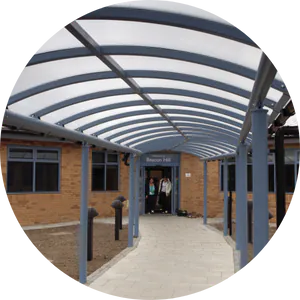
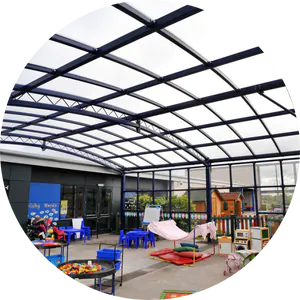
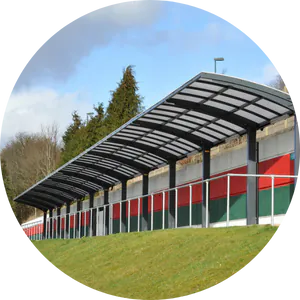
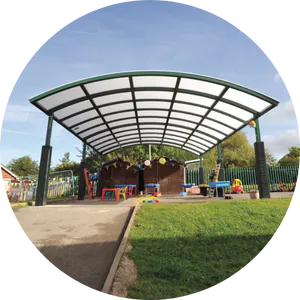
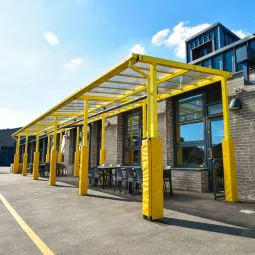
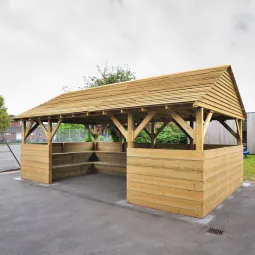
Broxap's range of shelters and canopies is ideal for creating covered outdoor dining and social areas for schools. Large span shelters and canopies create an area large enough to house picnic tables for pupils to eat lunch and socialise. Our dining canopies for schools are available in a wide range of designs and sizes.
The Newcastle Senior, for example, can be used to create a large covered outdoor dining area due to its modular design. The Lattice Newcastle Senior canopy was used at Archway School who required a covered seating area to free up internal space. They also required the space to be used for outdoor teaching.
Smaller outdoor dining and social areas are also available. Tensile fabric canopies such as the square conic tensile structure create a modern, airy outdoor covered dining and social area. Tensile fabric canopies provide protection from harmful UV rays and allow children to dine and socialise outdoors in the sunshine. An example of this is the Newark Academy break out area. They had an unused outside space which they wanted to make more use of.
Outdoor dining canopies are designed and manufactured to complement the existing surroundings. Large outdoor covered shelters provide additional space at a reduced cost. Shelters for schools are versatile and can also be used as an outdoor classroom or to create a chill-out area for pupils. Dining area canopies can be manufactured to any design and size to complement any surrounding areas and existing buildings.
Which Canopy Material Suits a Restaurant, Pub, or Café Outdoor Dining Area?
Material choice depends on how the venue trades, not just how the canopy looks:
-
Fabric (tensile fabric structures): best for aesthetic impact and creating a distinct outdoor 'room'. Suits destination dining and premium hospitality settings where the canopy is part of the guest experience. See Broxap's tensile fabric structures range for options.
-
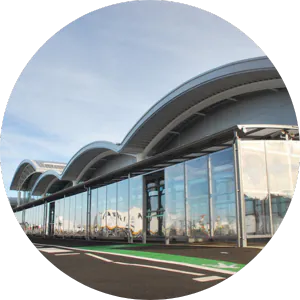
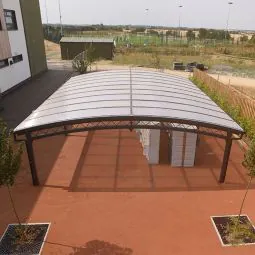
Polycarbonate: best for year-round weather protection and light transmission. Suits venues prioritising all-weather trading over architectural statement.
-
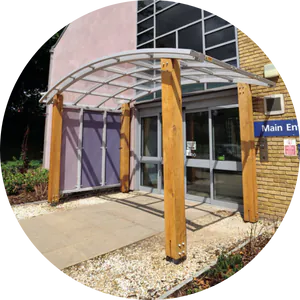
Timber: best for heritage settings, pubs, and venues where the canopy needs to visually match an existing period building or streetscape.
Do Outdoor Dining Canopies Need Planning Permission?
It depends on the structure. Temporary or retractable canopies, removed outside of trading hours or seasons, are more likely to fall under permitted development, while permanent structures with a fixed footprint or attached to a building are more likely to require planning consent.
Requirements are stricter in conservation areas or where an Article 4 Direction applies. Always confirm the position with the local planning authority before finalising a design; Broxap's design team can support with the drawings a planning application typically requires.
How Do You Size a Dining Canopy for Cover Count?
Measure required capacity in covers, tables and seats, rather than square metreage alone, and factor in circulation space for staff, accessibility routes, and any heater or planter footprint that reduces usable space. Involving the manufacturer early means the structure is sized to the actual floor plan rather than fitted to a standard module after the fact.
Why Choose Broxap for a Commercial Dining Canopy?
Broxap is a family-owned UK manufacturer, founded in 1946, designing and building street furniture, shelters and canopies for education, hospitality and commercial sites.
The business is certified to ISO 9001:2015 (quality management), ISO 14001:2015 (environmental management) and ISO 45001:2018 (occupational health and safety), and holds Constructionline, CHAS and Alcumus SafeContractor accreditation. Structural steel is CE marked, and timber is available under FSC® Chain of Custody certification (FSC-C122338), relevant where a hospitality client's own sustainability or procurement policy requires certified timber.
Browse the full range of outdoor dining and social canopies today, or get in touch with our team to discuss material options, sizing and planning support for your site.
It depends on whether the structure is permanent or temporary. Permanent canopies with a fixed footprint are more likely to require planning consent than temporary or retractable structures, and requirements are stricter in conservation areas. Always confirm with the local planning authority before finalising a design.
Fabric canopies prioritise aesthetic impact and are best suited to seasonal or premium hospitality use; polycarbonate canopies prioritise year-round weather protection, and timber canopies are best suited to heritage settings where the structure needs to match an existing building.
Yes, heating and lighting can be integrated into most canopy structures and are best specified at the design stage so wiring and mounting points are concealed rather than retrofitted.
Yes, Broxap is certified to ISO 9001, ISO 14001 and ISO 45001, and holds Constructionline, CHAS and Alcumus SafeContractor accreditation, alongside CE marking for structural steel and FSC Chain of Custody certification for timber.
The installation time depends on the size and complexity of the structure and on potential site preparations, such as levelling the ground or laying concrete footings. Typically, we can install a canopy in 1 to 5 days.
Yes, canopies can be manufactured to a bespoke design, size and finish to complement an existing building or streetscape, which is a common requirement for heritage pubs and period hospitality sites.