




Outdoor Musical Instruments for Active Play
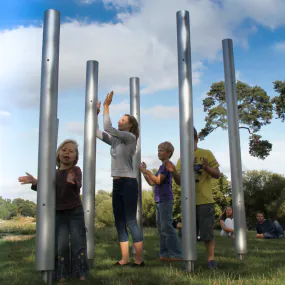
As outdoor musical instruments, Handpipes are designed to be played using hands or paddles, making them intuitive and accessible. The diagonal arrangement of the pipes encourages movement across the instrument, supporting physical activity alongside sound exploration.
Typical settings include:
• School playgrounds and outdoor learning areas
• Public parks and destination play spaces
• Inclusive and sensory play environments
• Community recreation areas
• Visitor attractions with interactive play features
The format supports both individual experimentation and group interaction.
Designed for School Playground Musical Use
Handpipes are particularly well suited to school playground musical instruments schemes, where durability and inclusive design are essential. The instrument allows pupils of varying ages and abilities to engage without prior musical knowledge.
Educational and play benefits include:
• Exploration of cause-and-effect through air and sound
• Development of coordination and motor skills
• Encouragement of cooperative play and turn-taking
• High-impact sound output that maintains engagement in open spaces
The responsive nature of the instrument helps sustain interest during repeated use.
Materials and Construction
Handpipes are manufactured using robust materials selected for outdoor performance and long-term reliability. The instrument is designed to withstand frequent use in unsupervised environments.
Key construction features typically include:
• Durable pipe elements engineered for consistent sound output
• HDPE mounting panel for strength and weather resistance
• Structural components designed for permanent external installation
• Secure fixings to reduce the risk of tampering or damage
All materials are chosen to perform reliably in UK outdoor conditions.
Durability and Safety in Public Play Areas
Musical play equipment installed in public and school settings must meet high standards of resilience and safety. Handpipes are designed to operate reliably under repeated, energetic use while remaining safe for unsupervised play.
Considerations include:
• Smooth, rounded surfaces to reduce injury risk
• Robust mounting to maintain stability during use
• Materials resistant to impact, moisture, and temperature variation
• Straightforward inspection and maintenance requirements
Installation and Specification Context
Handpipes are typically specified as permanent fixtures within playgrounds and public realm play schemes. Ground fixing methods are selected to ensure stability and compliance with relevant safety standards.
They are often installed alongside other playground musical instruments such as chimes, metallophones, or percussion panels to create a varied musical play zone. Handpipes can also be combined with wider play equipment to support integrated, multi-sensory environments.
Part of a Broader Musical Play Equipment Strategy
Within a wider musical play equipment scheme, Handpipes provide a contrasting sound and interaction style that complements more traditional tuned and untuned instruments. This diversity supports richer play experiences and encourages exploration across the site.
They are particularly effective where designers wish to introduce high-energy sound-making elements that remain accessible and inclusive.