




A Versatile Recycled Plastic Bench for Public Spaces
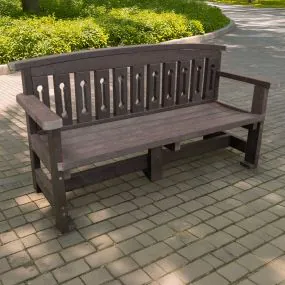
As one of Broxap’s most popular recycled plastic products, the Leith Seat has been successfully installed across a wide range of settings. These include:
• Public parks and gardens
• Schools, colleges, and university campuses
• Theme parks and visitor attractions
• Zoos, leisure sites, and community spaces
This adaptability makes it a practical recycled plastic bench for both formal and informal public realm schemes, where consistency and longevity are required.
Durable Construction Using Recycled Materials
Manufactured from 100 percent recycled plastic, the Leith Seat is engineered to withstand continuous outdoor exposure. Unlike traditional timber seating, it will not rot, splinter, or degrade, removing the need for staining, painting, or varnishing throughout its service life.
Key material benefits include:
• Weatherproof construction suitable for year-round outdoor use
• Resistance to moisture, UV exposure, and general wear
• Smooth, safe surfaces ideal for schools and public areas
• Colour retained year on year with no ongoing treatment
These qualities make it a dependable plastic outdoor bench for busy locations where maintenance access may be limited.
Practical Seating with Long-Term Value
The Leith Recycled Plastic Seat delivers a strong balance between functionality and value. Its robust form provides stable, comfortable seating, while the material choice supports sustainability goals often required by local authorities and educational clients.
As part of a wider scheme, this recycled plastic seating option is often specified alongside complementary products such as recycled plastic picnic tables, planters, or litter bins to create cohesive, environmentally responsible outdoor environments.
Specification and Integration
Available in a range of colours, the Leith Seat can be selected to suit surrounding architecture, branding requirements, or landscape designs. Its understated appearance allows it to integrate seamlessly into both urban and green spaces, without drawing unnecessary attention.
For larger projects, it is commonly used as a standardised recycled plastic park bench, ensuring visual consistency across multiple locations while keeping long-term maintenance costs under control.