




Highway Pedestrian Guardrail for Pedestrian Restraint
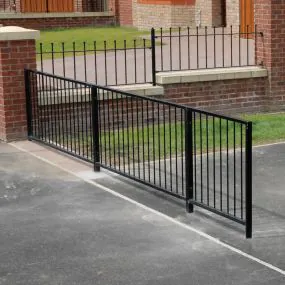
As a highway pedestrian guardrail, this system is intended to guide pedestrians towards designated crossing points and discourage access to the carriageway in inappropriate locations. The visibility gap detail provides a practical balance between containment and passive surveillance, which is often beneficial in busy urban environments.
Typical applications include:
• Town centres and high streets
• Junction approaches and traffic islands
• Signalised pedestrian crossings
• Central reservations and splitter islands
• Transport hubs and station forecourts
• Retail parks and commercial road networks
Suitable for Schools and High Footfall Locations
In areas where children, families and vulnerable road users are present, pedestrian restraint becomes a critical safety measure. This school pedestrian guardrail is frequently used around:
• School entrances and perimeter footways
• Drop-off zones and crossing patrol points
• Leisure centres and community buildings
• Parks and play areas adjacent to roads
The visibility gap helps maintain clearer views across the barrier, supporting safer decision-making for both pedestrians and drivers.
Construction and Materials
Steel Framework with Infill Bars
The guardrail is manufactured from:
• 50 x 30mm box section steel (main rail and frame)
• 12mm infill bars as standard
• 16mm infill bars available on request
This specification provides a strong and stable structure suitable for continuous outdoor exposure and frequent public use. As a metal pedestrian guardrail, it offers the rigidity required for pedestrian restraint, while maintaining a clean and consistent streetscape appearance.
BS 7818 Pedestrian Restraint Considerations
Pedestrian restraint systems are often specified in line with recognised standards, including BS 7818 pedestrian restraint, particularly where guardrails form part of a highways authority scheme.
While project requirements vary, specifiers typically consider:
• Overall height and containment performance
• Visibility requirements for drivers and pedestrians
• Spacing and bar diameter
• Site-specific loading and fixing details
• Coordination with kerbs, paving and tactile surfaces
This type of guardrail is well suited to schemes where compliance, safety and durability are key priorities.
Installation and Specification Guidance
The modular nature of pedestrian restraint systems allows for straightforward planning and installation across both new-build and refurbishment projects. For best results, guardrail layout is usually coordinated with:
• Crossing points and desire lines
• Traffic signals, signs and street lighting
• Kerb build-ups and drainage routes
• Adjacent street furniture and boundary treatments
Where longer runs are required, pedestrian guard rails can be installed as continuous lines, helping to provide consistent guidance and protection along the route.
Coordinated Streetscape Products
For a consistent highway and public realm scheme, this pedestrian guardrail can be specified alongside other Broxap products such as:
• Bollards for boundary protection
• Sign posts and signage columns
• Cycle stands and shelters
• Litter bins for town centre environments
• Seating and rest-point street furniture
This coordinated approach supports visual continuity while simplifying maintenance and asset management.
Product Summary
• Product type: Pedestrian guardrail with visibility gap
• Material: Steel
• Main section: 50 x 30mm box section
• Infill bars: 12mm as standard (16mm on request)
• Typical use: Highway schemes, schools, crossings and urban streets